Last Updated: November 15, 2026
Quick Summary
Effective treatments for recurring back pain focus on movement, strength, and load tolerance rather than a one-time fix, because the underlying weakness, stiffness, and movement habits were never addressed. Care typically combines guided exercise, manual therapy, and home measures, with a clear plan for flare-ups.
- A 2024 review found chronic low back pain care recommends therapeutic exercise, spinal manipulation, and acupuncture alongside NSAIDs.
- Effective treatment has three parts: a clear diagnosis with red flag screening, active care between visits, and a flare-up plan.
- Apply heat for 15-20 minutes for stiffness and ice for 10-15 minutes for a fresh flare-up.
- Stand and move every 30-45 minutes at a desk to address sitting-related triggers.
- Prolonged bed rest is the wrong move for most nonspecific back pain.
Table of Contents
- Why Recurring Back Pain Returns and What Effective Treatment Looks Like
- Chronic Lower Back Pain Treatment: Matching Care to Your Symptoms
- Physical Therapy for Back Pain and Guided Exercise
- Back Pain Relief at Home and the Best Medicine for Back Pain Relief
- Frequently Asked Questions
Why Recurring Back Pain Returns and What Effective Treatment Looks Like
Most back pain that keeps coming back is nonspecific low back pain, meaning imaging shows no single structural cause. That is why effective treatments for recurring back pain focus on movement, strength, and load tolerance rather than a one-time fix. This pattern is common: the pain settles, then returns months later. (Source: clinical practice guidelines)
Why does it return? Because the underlying weakness, stiffness, and movement habits were never addressed. A 2024 review of clinical practice guidelines found that chronic low back pain care recommends therapeutic exercise, spinal manipulation, and acupuncture alongside NSAIDs (review of recent clinical practice guidelines(https://pmc.ncbi.nlm.nih.gov/articles/PMC11061926/)). None of those is a single-session cure.
Effective treatment has three parts:
- A clear diagnosis, including red flag screening
- Active care you keep doing between visits
- A plan for flare-ups, so a bad week does not become a bad year
Below, we break down each option, what the evidence says, and how to build a plan.
Chronic Lower Back Pain Treatment: Matching Care to Your Symptoms
Chronic lower back pain treatment works best when it matches your symptom pattern, not a generic protocol. Clinicians commonly distinguish specific low back pain, where treatment targets an underlying condition, from nonspecific low back pain, where care focuses on function and pain control.
Use this as a starting point, then confirm with a clinician:
| Symptom Pattern | Likely First Step | Why |
|---|---|---|
| Pain mostly in the back, no leg symptoms | Physical therapy, manual therapy, graded exercise | Builds tolerance without irritation |
| Pain radiating down the leg | Evaluation for sciatica before exercise progression | Nerve symptoms need a different approach |
| Stiffness worse in the morning | Heat, gentle mobility, manual therapy | Targets stiffness before loading |
| Pain after sitting or desk work | Posture and body mechanics coaching | Addresses the daily trigger |
| New weakness, numbness, or bladder changes | Urgent medical evaluation | Possible red flag, not a therapy issue |
For nerve-related leg pain, sciatica treatment options may fit better than a general back program. For persistent disc-related pressure, nonsurgical spinal decompression is one option worth discussing. And if you want to see the full range of care under one roof, our back pain treatment services lay out what a multidisciplinary plan includes.
Watch out: self-diagnosing from a symptom chart and skipping an exam is the most common mistake we see.
Physical Therapy for Back Pain and Guided Exercise
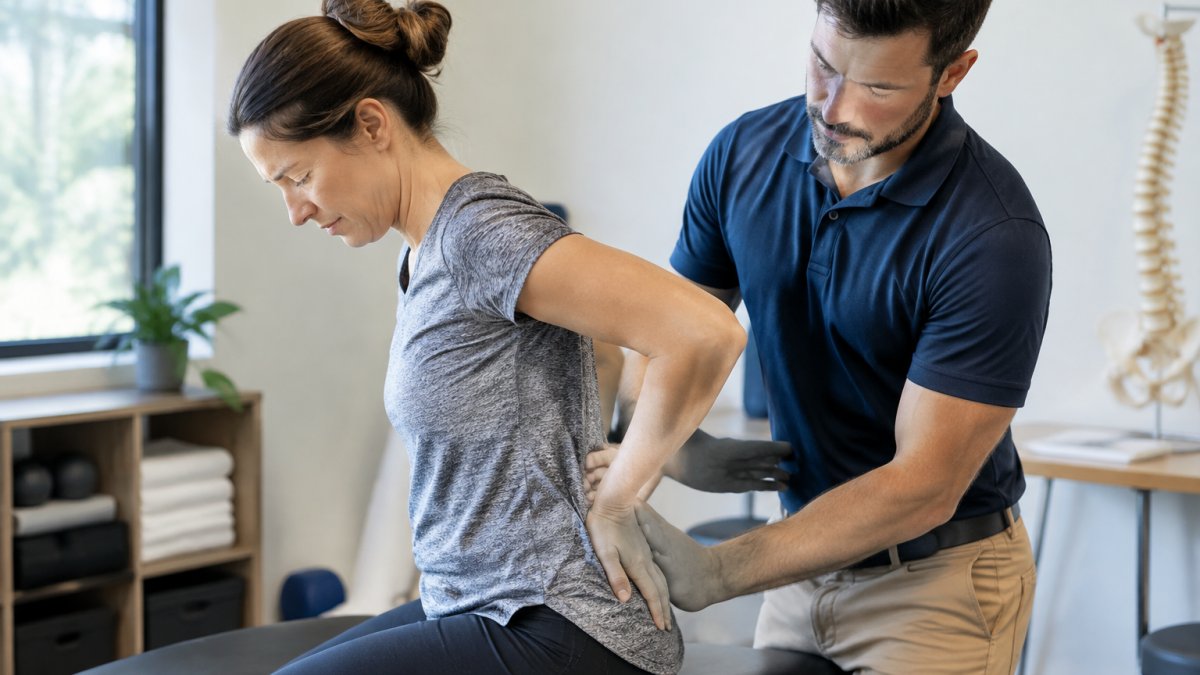
Physical therapy for back pain is the backbone of most effective plans. Conservative treatment, including over-the-counter pain medication and physical therapy, is commonly the first step in managing chronic back pain. A therapist adjusts load, range, and progression to your tolerance. (Source: National Institute of Arthritis and Musculoskeletal and Skin Diseases)

A typical guided program includes:
- Strengthening: core, hip, and trunk exercises, progressed weekly
- Stretching: hip flexors, hamstrings, and lower back, held briefly and often
- Gradual movement: short, frequent sessions beat one long one
- Exercise tolerance building: small increases in load, not big jumps
Exercise, home physical therapy, mindfulness, acupuncture, and massage are among the approaches commonly discussed for chronic back pain.
For non-invasive options beyond exercise, shockwave therapy is one therapy some patients ask about. It is not right for everyone, so ask during your evaluation.
Back Pain Relief at Home and the Best Medicine for Back Pain Relief
Back pain relief at home starts with three things: stay active, use heat or ice correctly, and pick medication with a clear purpose. Prolonged bed rest is the wrong move for most nonspecific back pain.
Home relief that works:
- Heat therapy: 15-20 minutes for stiffness and muscle tightness
- Ice pack: 10-15 minutes for a fresh flare-up with inflammation
- Walking: short, frequent walks to keep the spine moving
- Position changes: stand and move every 30-45 minutes at a desk
- Sleep setup: support the lower back, avoid a soft sagging mattress
On the best medicine for back pain relief: there is no universal answer. Over-the-counter options include NSAIDs such as ibuprofen and naproxen, plus acetaminophen. NSAIDs reduce inflammation but carry stomach, kidney, and heart risks, especially with long-term use. Acetaminophen helps pain but not inflammation. Muscle relaxants are sometimes prescribed short-term. Check with a clinician or pharmacist before combining anything, particularly if you take blood thinners or have kidney disease.
Watch out: masking pain with medication while ignoring the cause is how a two-week episode turns into a recurring one.
If home measures are not holding, schedule an appointment so we can assess what is driving the pattern.
Recurring back pain rarely resolves on its own, and guessing at treatment wastes months. At Rock Creek Spine, our board-certified team combines chiropractic care, physical therapy, acupuncture, and massage into one plan built around your exam findings. Same-day appointments are available, and our new patient special includes a consultation, exam, and adjustment. Get started with Rock Creek Spine and build a plan that targets the cause, not just the flare-up.
Frequently Asked Questions
Why do I keep getting recurring back pain?
Most recurring back pain comes from a mix of weak core and hip muscles, prolonged sitting, and returning to activity too fast after a flare-up. The World Health Organization separates specific low back pain, where a condition like a disc issue drives symptoms, from nonspecific low back pain, where no single cause is found. Nonspecific cases often return when the underlying movement and strength problems are never addressed. A proper exam helps identify which pattern applies to you before you commit to a treatment plan.
Can physical therapy for back pain prevent it from coming back?
Physical therapy for back pain focuses on strengthening exercises, stretching, and gradual movement that build exercise tolerance. Clinical practice guidelines for chronic low back pain commonly recommend therapeutic exercise and non-drug approaches such as physical therapy. A guided home exercise program plus regular check-ins gives you a structured way to stay active between flare-ups.
When should I see a healthcare professional for recurring back pain?
Book an evaluation if pain keeps returning, lasts more than a few weeks, or limits daily activities and sleep. Seek prompt care for red flags: numbness in the groin or saddle area, loss of bladder or bowel control, progressive leg weakness, fever, unexplained weight loss, or pain after a fall or auto accident. Conservative treatment, including over-the-counter medication and physical therapy, is commonly the first step for chronic back pain, so an early exam helps you start the right approach.
